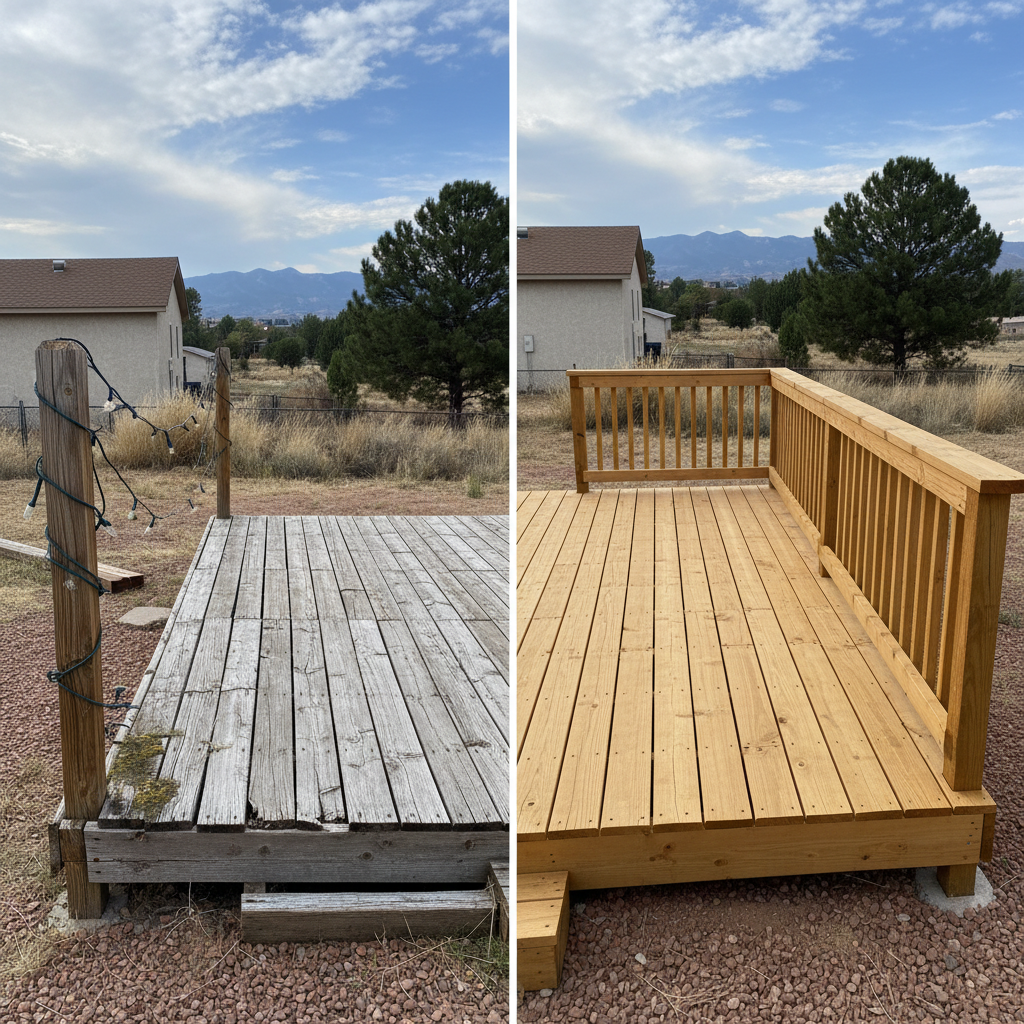
Your deck's looking a little rough, huh? Maybe a few rotten boards, some splintering, or just a general worn-out vibe. When that happens, homeowners in Pueblo usually think one of two things: can I just patch up the bad parts, or do I need to tear it all off and put new decking down? It's a common question, and the answer isn't always straightforward. Let's talk about it.
Patching Up: The Spot Repair Approach
This is exactly what it sounds like: you identify the damaged boards, remove 'em, and replace 'em with new ones. It sounds like the cheapest, easiest option, right? Sometimes it is, but there are definitely some catches you need to be aware of.
The Good Side of Patching
- Lower Upfront Cost: You're only buying a few boards, not a whole deck's worth of material. This is the biggest draw for most folks.
- Quicker Job: Less material to remove, less to install. A small patch job can often be done in a day or two, depending on the extent of the damage.
- Less Disruption: Your yard isn't a full-blown construction zone for as long.
The Downside of Patching
- Matching Issues: This is a big one. Unless your deck is brand new, those new boards aren't going to match the old ones. Even if you use the exact same type of wood, the new lumber will be a different color, texture, and weathering stage. It'll stick out like a sore thumb until it ages, and even then, it might never blend perfectly.
- Hidden Problems: You fix one rotten board, but what about the joist underneath? Or the board next to it that's just starting to go? Often, when you start pulling up old decking, you find more damage than you anticipated. What looked like a small repair can quickly snowball.
- Uneven Wear: Your old deck boards have years of foot traffic, sun exposure, and weathering. The new boards won't have that, so you can end up with an uneven surface or varying levels of durability across the deck.
- Short-Term Fix: If the rest of your deck is old and nearing the end of its life, patching is just delaying the inevitable. You might fix one spot, only to have another section fail a year or two later. It can turn into a frustrating cycle of chasing repairs.
Full Resurface: The Deck Overhaul
A full resurface means removing all the existing decking boards (the surface you walk on) and replacing them with brand new material. You keep the existing frame and foundation, assuming they're in good shape. This is a more significant undertaking, but it often provides a better long-term solution.
The Good Side of Resurfacing
- Uniform Appearance: Everything's new! You get a consistent look across your entire deck. No mismatched boards, no weird color variations. It's like getting a brand new deck without the cost of a full tear-down.
- Long-Term Durability: You're starting fresh with all new decking material. This means your deck will last much longer before needing significant repairs again. You can also upgrade your material, maybe going from pressure-treated pine to cedar or even composite decking for even greater longevity and less maintenance.
- Opportunity for Upgrades: Since all the old decking is off, it's the perfect time to inspect and repair any issues with the underlying frame, add new lighting, or even change the deck board pattern.
- Increased Home Value: A beautifully resurfaced deck significantly boosts your home's curb appeal and market value.
The Downside of Resurfacing
- Higher Upfront Cost: You're buying a lot more material and paying for more labor. There's no getting around it; this option costs more initially than patching.
- Longer Project Time: More material to remove and install means the project will take longer, typically several days to a week or more, depending on the deck's size.
- More Disruption: Your deck will be out of commission for a longer period.
Which Option is Right for Your Pueblo Home?
This is where local conditions really matter. Here in Pueblo, we deal with intense sun, significant temperature swings, and sometimes even hail. That kind of weather is brutal on deck materials. I've seen countless decks in neighborhoods like Belmont or the Mesa where a few bad boards are just the tip of the iceberg. The sun bakes the wood, causing it to dry, crack, and splinter, and then when we get a good rain, that moisture gets into those cracks and starts the rot process.
If your deck is relatively new (say, less than 5-7 years old) and only has a handful of truly isolated damaged boards, a spot repair might make sense. But even then, I'd caution you to really inspect the surrounding areas and the frame. If the damage is widespread, or your deck is pushing 10+ years, a full resurface is almost always the better investment.
Think about it: you patch a few boards now, spend a few hundred bucks. Then in two years, another section goes bad, and you patch again. Before you know it, you've spent a good chunk of change on piecemeal repairs, and your deck still looks like a patchwork quilt. A full resurface, while more expensive upfront, gives you a cohesive, durable, and beautiful deck that will last for years to come. It's a better return on your investment, especially with our climate.
At Skyline Decks Pueblo, we always recommend a thorough inspection to help you make the best decision. We'll give you an honest assessment of your deck's condition and walk you through the pros and cons for your specific situation. Don't just guess; get a pro's opinion before you commit to a repair strategy.